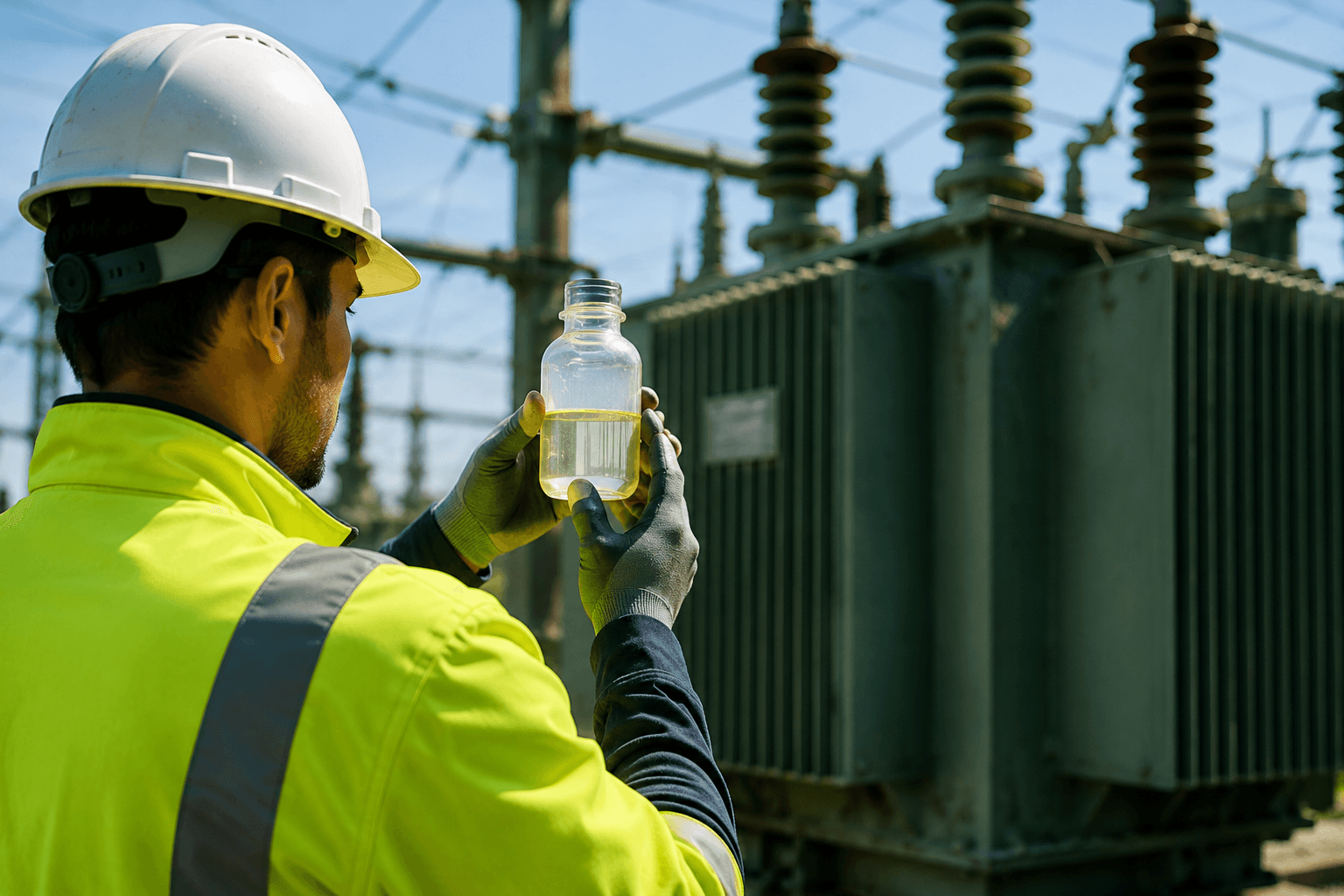
A transformer oil sampling program is not a single activity. It is an operational process that spans months and years, involves multiple teams and external partners, and produces records that must remain accurate, traceable, and defensible long after the decisions they document have been acted upon. For utilities managing fleets of dozens or hundreds of oil-filled assets, the coordination burden surrounding that process is substantial — and the consequences of managing it poorly are not limited to administrative inefficiency. Missed samples, lost laboratory results, undocumented engineering decisions, and untracked schedule changes all represent real operational and compliance risk.
Most utilities currently manage this process through a combination of spreadsheets, email, shared drives, and organizational memory. DGAWatch replaces that combination with a single structured workflow environment designed specifically for utility oil sampling operations.
The Scope of an Oil Sampling Program
Before examining how DGAWatch structures the workflow, it is worth being precise about what that workflow actually encompasses.
A complete oil sampling cycle for a single transformer asset involves, at minimum determining when the asset is due for sampling based on its current condition classification and assigned interval; generating a sampling order and coordinating field collection; managing sample shipment and chain of custody to the laboratory; receiving, validating, and importing laboratory results; conducting engineering review in the context of the asset's full diagnostic history; documenting the review decision and any resulting changes to the sampling schedule; and maintaining all of the above as a permanent, auditable asset record.
Multiplied across a fleet of fifty, two hundred, or five hundred assets — with varying condition classifications, multiple laboratory partners, regional engineering teams, and overlapping sampling cycles — the coordination requirement becomes significant. The margin for error is correspondingly narrow. A sample collected on schedule but never formally reviewed, or a laboratory recommendation that changes a sampling interval without documentation, represents a gap in the program that may not surface until it matters most.
DGAWatch is designed to close those gaps systematically.
Sampling Program Coordination
At the asset level, DGAWatch maintains a complete sampling program record including the assigned sampling interval, the scheduled next sample date, any active resampling guidance, historical sampling activity, and open orders. This record is not static. It reflects the current operational state of the asset's sampling program at any given point in time.
Sampling intervals in DGAWatch can be driven by multiple inputs fixed organizational schedules, engineering-directed adjustments, laboratory resampling recommendations, or elevated risk conditions identified through diagnostic review. When any of these inputs changes a scheduled date, the change is documented with a reason and attributed to the user or workflow action that initiated it.
This matters for auditability. A utility that can demonstrate not only what its sampling schedule was, but why it was set that way and when it changed, is in a fundamentally stronger position — operationally, regulatorily, and legally — than one whose schedules exist in a spreadsheet with no version history.
At the fleet level, the platform provides continuous visibility into sampling program status across all assets what is on schedule, what is approaching its due date, what is overdue, and what is currently in process. This operational dashboard view allows engineering and operations supervisors to direct attention and resources proactively rather than reactively.
Sampling Orders
When an asset is due for sampling, DGAWatch supports the creation of a formal sampling order within the platform. Orders can cover a single asset or a group of assets — useful for coordinating bulk sampling campaigns across a substation or region.
Each order captures the relevant operational detail the laboratory assigned to process the samples, shipping and handling information, the test types requested, any operational notes relevant to field collection, and the priority classification for the order. This structured record replaces the email thread or phone call that typically initiates the field collection activity in spreadsheet-based programs.
Once created, orders move through a defined set of operational states that reflect the actual status of the activity they represent. A newly created order begins as a draft. It progresses through sample collection, shipment to the laboratory, awaiting laboratory upload, results received, pending engineering review, and finally completed. At any point in that progression, anyone with appropriate access can determine exactly where in the workflow a given order stands — without sending an inquiry email or checking a shared folder.
This transparency is operationally valuable not just for the teams managing the sampling program, but for the engineering staff who depend on a steady, reliable flow of diagnostic results to maintain their review workload.
Laboratory Coordination
The interface between utility and laboratory is one of the most error-prone stages of the oil sampling workflow. Results arrive in varying formats, are manually transcribed into spreadsheets, and are associated with assets through informal naming conventions that degrade in reliability over time. Resampling recommendations embedded in laboratory reports are frequently overlooked or applied inconsistently.
DGAWatch addresses this through a controlled laboratory coordination workflow. Laboratories upload results directly to the platform — DGA values, oil quality parameters, PDF laboratory reports, and resampling recommendations — and those results are validated against expected format and field requirements before they are made available for engineering review. Uploaded data is associated automatically with the corresponding asset and sampling order, eliminating the manual transcription step and the transcription errors that accompany it.
For laboratory partners that operate through spreadsheet-based result submission, DGAWatch supports a structured XLSX workflow with dropdown validation, locked reference fields, context-aware templates, and import validation rules. This gives utilities a controlled import path that retains the accessibility of spreadsheet-based submissions while eliminating the free-form data quality problems those submissions typically produce.
Engineering Review
Laboratory results that pass validation enter the engineering review workflow. This is the stage at which a qualified engineer evaluates the diagnostic data in the context of the asset's full history — comparing current gas concentrations against prior results, assessing trend behavior, evaluating severity classification, and reviewing any resampling guidance submitted by the laboratory.
DGAWatch supports this review within the platform rather than redirecting engineers to external tools or printed reports. The asset's complete sampling and diagnostic history is available in the same environment where the current results are presented, making trend-aware review the default rather than an additional step requiring manual data assembly.
At the conclusion of review, the engineer formally approves the submitted report or requests clarification from the laboratory. Approval incorporates the result into the permanent asset record. A clarification request keeps the report in the workflow — traceable, available for revision, and not silently discarded. The clarification request is documented. Revised results, when they arrive, go through the same validation and review process.
This formal review structure reflects the operational reality of utility transformer programs engineering decisions about high-value assets need to be made by qualified people, documented in an attributable way, and retained as part of a defensible historical record.
Resampling Guidance
Laboratory reports frequently include recommendations for accelerated resampling — particularly when gas concentrations are elevated, trending adversely, or when oil quality results warrant closer monitoring. In a spreadsheet-based program, these recommendations are easy to miss, inconsistently applied, and rarely tracked with the specificity needed to demonstrate compliance with a condition-based maintenance standard.
DGAWatch incorporates laboratory resampling guidance into the engineering review workflow rather than treating it as a footnote to the result. Recommendations are surfaced explicitly during review. Engineers can adopt, modify, or override them — but they cannot be ignored silently. When a recommendation is adopted and a sampling schedule is adjusted as a result, that adjustment is tracked with attribution and timestamp.
Critically, recommendations are not applied automatically. The platform is designed to support engineering judgment, not circumvent it. An automated system that adjusts sampling schedules without engineering review introduces risk rather than reducing it. DGAWatch ensures that the recommendation reaches the engineer who needs to evaluate it, and that whatever decision is made becomes part of the auditable record.
Auditability and Traceability
Every action in the DGAWatch oil sampling workflow — order creation, result upload, validation outcome, engineering approval or clarification request, schedule modification, status change, and user action — is logged as part of the operational record. This log is not a separate reporting function. It is an inherent property of the workflow itself.
For utility environments, this level of traceability is not an optional feature. It is the operational foundation that allows a transformer maintenance program to be demonstrated as controlled, consistent, and responsive to asset condition over time. When an asset fails, when a maintenance program is reviewed, or when a regulatory question arises about the basis for a maintenance decision, the ability to produce a complete, chronological, attributed record of every action taken in the program surrounding that asset is the difference between a defensible program and an indefensible one.
DGAWatch is designed to make that record the automatic output of normal operations — not something that requires reconstruction after the fact.